

Marketing cope in a polycrisis
Everything is marketing, and nobody wants to admit it.

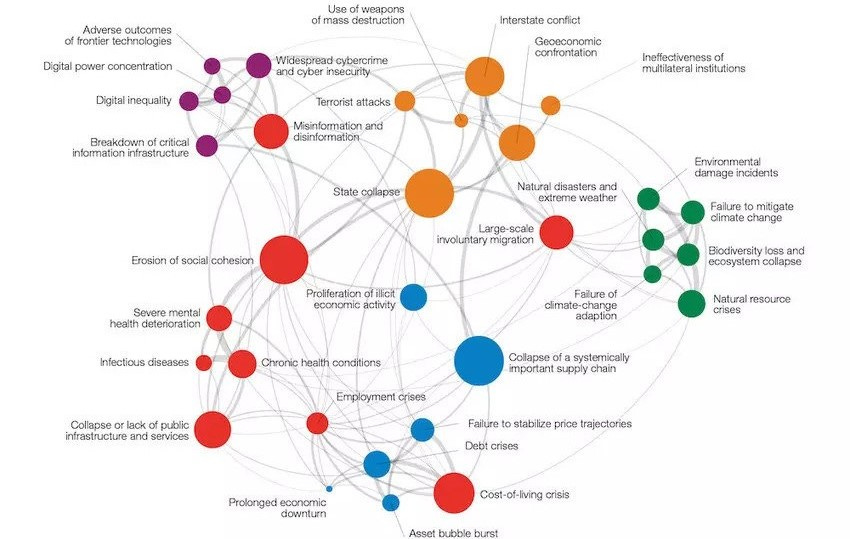
If you’re still not sure what a polycrisis is, Adam Tooze has a good explainer:

It’s also what William Gibson called in his most recent novels, The Jackpot.
Nobody mentions how slow and interminable and all-consuming The Jackpot can be.
Three mornings this week I sat down to write something for the newsletter, and each time I got waylaid. It’s exhausting to witness from a distance the malignant invasion happening across the country; it’s disorienting to walk outside my home and encounter … nothing. Literally nothing: my neighborhood is a combination of empty vacation homes and blue collar workers who are not home during the day. The neighborhood streets do not have sidewalks or street lights.
Yesterday, while walking my dog, we encountered two miracles — one of our neighbors and her dog were out walking too, a rare human/canine encounter; and a fox was running along the edges of people’s lawns — I had not seen a fox in our “neighborhood” in several years. And then, for the afternoon walk, we forged through a preserve trail and encountered one white tail deer who kept a watchful eye on us, and a fallen buck, dead in the leaves. Some mornings at this time of year, we wake up to the sound of rifle shot. Lately, this has been especially unnerving.
Back in front of screens, there is a strange incoherence to the feeds. Podcasts struggle to keep pace with the news cycle. So they feel almost frivolous when you scroll through them — like they’re living in some other world from the one that’s shouting at you through notifications.
YouTube’s algorithm continues to try to push content at me I don’t want. Even channels I subscribe to don’t always show up in the feed; and now the feed isn’t even all video, which is annoying.
Instagram, however, seems unconcerned with showing me things I wasn’t looking for, so I’m getting lots of woodworking, cute animals, music, fashion and anti-fascism. It’d be comforting if it didn’t also get tedious.
None of them seem capable of real-time coverage of All This. Sometimes I put on a cable news channel on TV — and they, too, seem disconnected. Some days they seem completely unaware of anything happening outside of Minneapolis and the White House. Some days they seem unaware of anything happening in America. I have an ambient sense that whatever they’re talking about on MSNOW isn’t what they’ll be talking about on CNN and isn’t what Tony will be talking about on Whiskey Fridays.
I hop from newspapers and magazines to cable news channels to live streams on YouTube, to podcasts and the net effect is total overwhelm and a sense of feeling less connected, not more; less in community, not more; less seen, not more.
Whatever those of us who believed in the future of the internet were imagining has not come to pass.
Judgment matters
Advertising-oriented algorithms are agnostic about the content they’re presenting to you. I mean that quite literally — the tech platforms aren’t sure if they believe in content, they just present it. What they believe in is metrics that advertisers care about, because advertisers will pay them for those metrics. Programmatic advertising in particular exercises no special judgment — they want audience profiles A, B, and C and a view count of X. They will pay a certain amount per impression or click-through1. That’s it.
When advertising was not programmatic — when media buyers were reviewing the content, the ratings or subscription base sizes, and the audience profiles of subscribers, they had to exercise judgment. Are there enough of the audience types we want to connect with here, and does it make sense for our brand to appear in this place, among this content?
I tell this story a lot — in the early days of advertising on MTV, Nike bought loads of commercial slots. They were on the air constantly. The audience was small — but it was right, and they wanted to be associated with what MTV was doing; MTV’s brand was complementary to their own.
When I worked on Apple, it was not at the peak of its wealth, so we made judicious choices about where the ads should appear. The strategy was “go big or don’t go.” We bought media with impact, and we focused on what we called “Apple-minded people” — who appreciated design, thought of themselves as creative, were willing to pay a little more for a machine that suited their sense of themselves (not just a ‘business machine’). Some of the cues about where to place media came from other brands our Apple-minded customers also bought — if other brands our audience bought for similar reasons were advertising somewhere, we should probably be there too. And of course, the "Genius” campaign was something that print media outlets wanted — and often wanted on their back cover, because it made them look upscale, aspirational. Who wouldn’t want to associate themselves with Picasso and Gandhi and Callas and Einstein and Earhardt?
This is called “borrowed interest”. It’s why brands get celebrity and influencer endorsements — they want a little sheen from another brand to rub off on them. When your brand’s ads appear on a prestige television show, among other aspirational brands making high quality advertising, featuring celebrity cameos, you get a kind of halo effect — your brand is associated with those other things that the people you’re trying to attract love.
Republicans are brand marketers…
Greg Sargent recently wrote in The New Republic about the unpopularity of the ICE/CBP raids. In it, he describes the findings of a memo circulated by Blue Rose Research:
“In testing of 15 viral videos about the Minneapolis shooting, raw eyewitness footage and straightforward reporting consistently drove meaningful increases in Trump disapproval,” reads the memo, which I’ve obtained, though it also says some ideologically charged messages were less effective.
The testing also found that the killing has “broken through with voters,” the memo says, with 86 percent saying they have heard at least “a little” about it and 76 percent saying they’ve seen footage. And importantly, the testing also finds that Democratic proposals to rein in ICE have broad support. Voters favor requiring warrants for arrests by 29 points, and back a prohibition against masking during arrests by 16 points, though “Abolish ICE” remains a few points underwater.
This should represent a rare opportunity for Democrats. 3 out of 4 Americans say they have seen footage of the murder of Renee Good. That’s insanely high penetration.
Even those influencer channels that MAGA believes are most likely to have sizable MAGA-minded audiences — that Trump and his campaign spent hours with on livestreams and podcasts during the campaign, and largely won over in those appearances — are finding it hard to stomach what they’re seeing. Sargent’s piece talks about Rogan describing what he saw as akin to the Gestapo.
Meanwhile, The Washington Post reported on New Year’s Eve that:
“U.S. Immigration and Customs Enforcement officials are planning to spend $100 million over a one-year period to recruit gun-rights supporters and military enthusiasts through online influencers and a geo-targeted advertising campaign, part of what the agency called a “wartime recruitment” strategy it said was critical to hiring thousands of new deportation officers nationwide, according to an internal document reviewed by The Washington Post.”
But this is more interesting: the campaign’s approach to targeting MAGA-minded people, “including through ads targeting people who have attended UFC fights, listened to patriotic podcasts or shown an interest in guns and tactical gear.”
They’re also going straight for borrowed interest methods, as well as trying to reach people when they are most likely to be in a MAGA mindset by allocating “millions of dollars in spending for Snapchat ads, influencers and live streamers on Rumble, a video platform popular with conservatives. Under the strategy, ICE would also use an ad-industry technique known as “geofencing” to send ads to the phone web browsers and social media feeds of anyone who set foot near military bases, NASCAR races, college campuses or gun and trade shows.”
The creative is pure fascist aesthetics, but it’s also a huge departure from the low-rent earnestness of most government recruiting advertising:
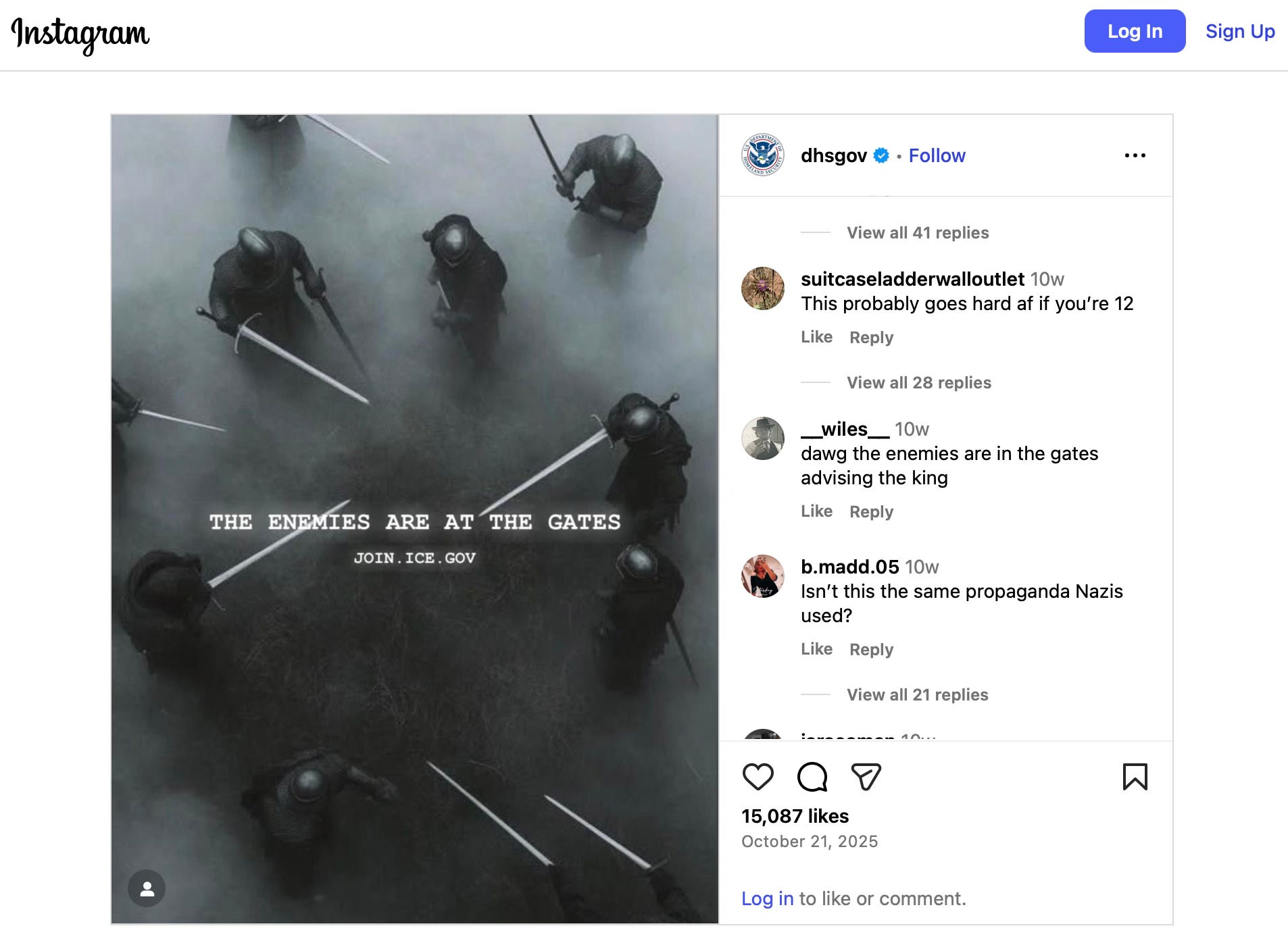
Some of them would be funny if they weren’t sinister:

So let’s sum up: your tax dollars are being used not to feed poor kids, or provide essential health services to seniors, or to regulate the purveyors of generative CSAM, but to fund a $100 million ad campaign to recruit fascist foot soldiers.
The one thing I can say for this, the one way in which I gotta hand it to them, is simply that they understand how marketing works, and what it’s for. They understand how ad targeting works, how borrowed interest works, how provocative, category-busting creative works.
As near as I can tell, Democrats do not understand this.
…Democrats are not
While Blue Rose Research is affirming that ICE’s activities are unpopular, they’re also cautioning against the “abolish ICE” tagline. They’re not alone — Third Way asked a question designed to get people to choose anything other than “abolish ICE” by bundling it with “decriminalizing the border”. And it seems to be taken as read that “abolish ICE” is a messaging trap because Republicans love to pummel Democrats over a lax immigration messaging strategy (not even a lax policy, since Democrats pushed an extremely conservative immigration bill during Biden’s presidency. The lesson should be, they’ll pummel you regardless of what you say and do, so say and do what’s right).
I can quibble about the polling here all day, but I think it’s fair to say based on YouGov and other polling on the question of abolishing ICE and replacing it with another agency that this much is true:
Democrats’ support for getting rid of ICE as it currently exists is 2:1 versus opposition to it. Meanwhile, and perhaps most importantly, something like 1 in 5 Americans aren’t sure what to do about ICE.
This is an opportunity, not a trap. When twice as many of your audience are inclined to believe something, it’s a great time to reinforce that belief and convince other people to believe the same thing.
I mean, if you believe it, too.
I think the truth is simply this: most elected, professional Democrats don’t believe in abolishing ICE. They don’t believe in shrinking its budget, or constraining its remit, or creating too much more accountability for it. They’re fully bought in on the post-9/11 framework of “the homeland” and its inherent suspicion of all foreigners, and the need for a mighty police state.
But let’s say you’re in the Progressive Caucus and you have endorsed a bill to strip $175 billion from ICE and put it towards a variety of programs to increase access to affordable housing.
This is genius — it changes the choice: not ICE or not ICE, immigration enforcement or no immigration enforcement. Instead it’s “a shitload of money to pay thugs to terrorize communities, or a shitload of money to help you afford housing”.
Think what you could do with even $25 million in ad money to support such a bill! You, too, could geo-fence and employ progressive-minded targeting for your campaign. You could develop amazing TV and social ads, and establish partnerships with creators and influencers. You could organize meet-ups and support community groups. You could build a website to gather email addresses of people interested in participating in those programs if they get funded — email addresses you can use to get those people out to town halls, writing postcards and making phone calls to help you get the legislation passed. You can use those same emails and geo-fenced ads to let your supporters know who is standing in the way, and where the money is going instead.
You can build hope and resolve while also directing the anger away from you for failing to get it done and at the people who would rather kidnap our neighbors than make it possible for a young family to afford a starter home.
But you’d have to understand how advertising works. Great advertising doesn’t just “meet people where they are” — by the time you get there, that’s where people were. You meet them where they want to be — we often say “skate to the puck” because the puck is moving, usually fast, and this requires speed, agility and foresight.
And that’s what Third Way and all the other centrist groups get wrong. They will, without fail, accept the Republican frame. They accept every premise — and for that matter every solution, chiefly: more money for cops and soldiers, more tax cuts for the wealthy and corporations. For everyone else, paperwork2.
They do not want to campaign, nor govern, as an opposing party, but as a more palatable, humane version of the Republican Party.
One of many problems with Democrats is they spend their time measuring and not marketing. They exercise caution, not judgment. They try to chase attention instead of trying to create it or channel it or direct it. They ask for other people to reach consensus instead of building it themselves.
Back to where we started
One refrain I keep seeing in my feed is “where are the Democrats?”
Everyone “knows” the Democrats are favored to win back the House this year. Since Mary Peltola got into the race in Alaska, more people are hopeful they could win the Senate, too (though not by a filibuster-proof majority).
The leadership seems to have adopted Carville’s infamous play dead strategy.
Despite more house seats shifting towards Democrats — in fact, Cook Political Report says 18 more House races have shifted towards the Democrats — the part overall remains underwater on its favorability ratings:
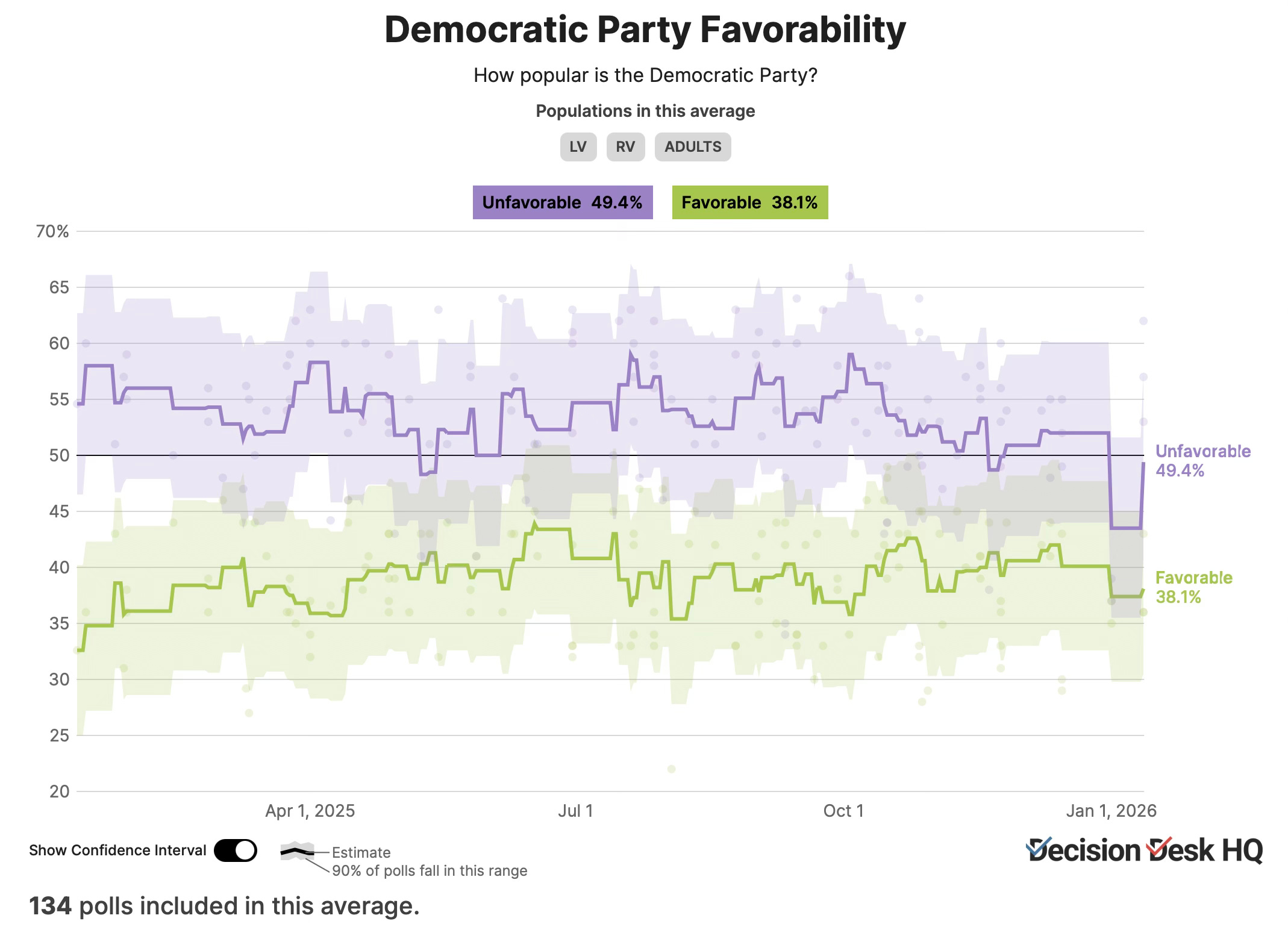
Decision Desk HQ has them rated 11 points net-unfavorable.
People fixate, rightly, on the pointless utterances of Schumer and Jeffries.
The Democrats who stand out are local: the mayor of Minneapolis, various Democratic governors in Blue States from Maine to Minnesota to Oregon to California.
Some Democrats with a national profile seem to be trying to lead by example:
Why do they stand out? Because they will talk to anyone, and they will use plain language, say exactly what they mean, say what is right and what is wrong, call evil by its name, and do it with passion and compassion.
It’s the opposite of the fascist aesthetic. It is deeply human, community-centered, stands in solidarity with people being victimized and stands outraged against the excesses of what folks in the 90s used to call jack-booted government thugs.
If only it had a budget. Maybe this guy could throw some change at it:
I will set aside today the fact that a significant portion of those impressions are fraudulent. But you should also know that they are. Turns out the platforms don’t really believe in users, either.
Lord knows what the working middle class needs to do is fill out forms to see if they qualify according to your means tests.