

If I Did It**
A few initial thoughts about how a branding agency would approach rebranding the Democrats

I remember having this moment in college, in an advertising class, where I realized that the reason political advertising sucks now is because they stopped getting Madison Avenue to make the ads, and started getting K Street to make them.
It’s a long time since, but I still generally feel this way.
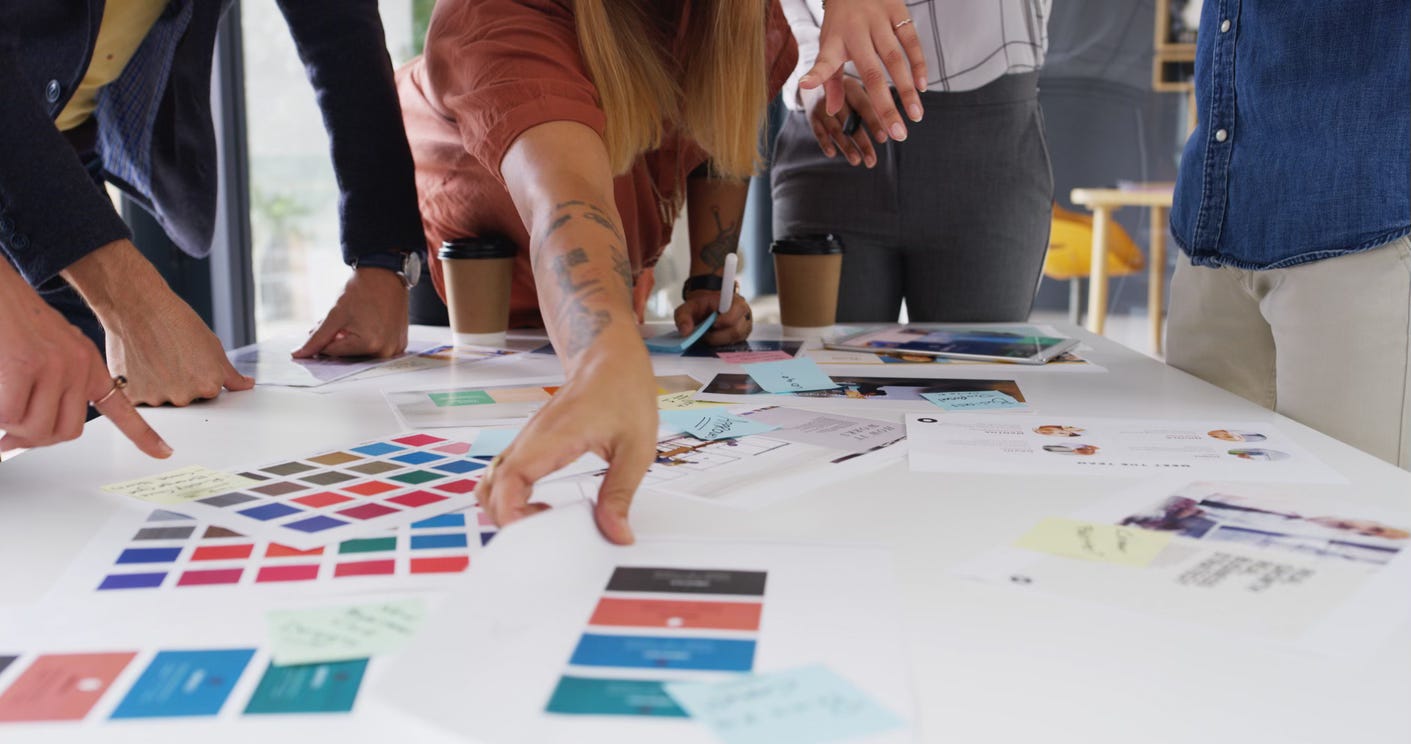
So because a few people have asked me what we’d do differently in Adland, I’ll start by sharing what we’d have done back when budgets were flush, creative agencies believed in the power of insight, and clients weren’t in “I Need It Yesterday” mode. I suspect a lot of us still pitch this process as I’ll lay it out, but capitalism being what it is, it’s not altogether common to do it exactly like this in actual practice.
Still, it is best practice. So I’ll lay it out here.
And then those of you who work in political ad making and research can tell me what’s different and what’s the same.
NB: This is turning out to be a really long description of process, so I’ll put these out in a few parts.
Here is Part One.
Framing the Challenge
Let’s say the Democrats are a normal brand, and they come to a marketing consultancy or ad agency and say something like,
“Here’s our problem. We’ve been around for a long time. We’ve changed quite a bit over the years, but still - everybody knows who we are. We know from surveys that our customers don’t like us very much, but they do keep buying us.
We’re not sure why they don’t like us, or why they buy us anyway, or why sometimes they buy us and sometimes they don’t. We’re not sure what the difference between our most consistent and loyal, and even our most enthusiastic buyers are and the people who only buy us some of the time.
“And while we have a lot of ideas about features and benefits we could talk about, we’re not sure (a) why what consumers perceive our brand to be is not what we perceive our brand to be, and (b) how we can reach our current and potential audience, and (c) how to reinvigorate our brand for our audience, and maybe grow that audience, too.”
In Adland, we’d immediately recognize a few problems we can absolutely solve:
1. Audience definition. We need to figure out who the superfans are, as well as the frequent habitual buyers, the infrequent buyers, and the detractors who nevertheless choose the brand sometimes.
2. Brand (re)positioning. We need to figure out how to position the brand — within the culture, against the competition, and in the minds of their consumers.
3. Channel planning. We need to figure out what the audience reads, watches, listens to; where they encounter the brand out in the world; whose opinions they value; and how recommendations and word of mouth spread in the category and among these consumers.
Now, because I work in strategic consulting, I’d ask a few more questions. They would include at least these, because I almost always ask these questions in new client onboarding meetings:
How have you got to this point, and why do you want to do this work now?
Where are you in the process? What have you already done/are doing to help answer these questions or solve these problems?
Who is the internal audience for this work? Who needs to be persuaded, brought along, who will provide the necessary investment and protection for any new initiative we bring you (and you approve)?
How will this work be used both internally and externally?
What other internal operational or business decisions will it influence?
What do you already know?
Of course I’d want to know about timing and budget expectations, too, but those things come after we’ve gathered all the answers to these questions. And anyway, the Democrats may not have a lot of cash right now, but they’re certainly capable of raising the dough if they really want to.
Getting Started
We always start with what I refer to as “desk research” - we’d look at the brand as it is, the category context, and the consumer mindset. I’d also usually look at any public filings about the financial health of the business, what’s working and what’s not from a revenue/profit point of view, and try to get a sense of when things changed, to help pinpoint what the real problem or fault lines are.
But mostly we’d start to do a kind of **brand**, **category** , **consumer culture** audit. We’d look at:
1. The brand itself:
The history and progress of the brand — how it’s positioned itself before, what it has stood for and does stand for now, and track the visual and language cues used by the brand over time. What metaphors, colors, images, mascots, logotypes, typefaces, music, styles have they adopted?
Recent communications — We’d map out all the advertising and content the brand has done in the last 1-2 years. We’d build out a 2x2 map of approaches that might have axes about message, tone, audience, or purpose of the communication.
Channel mapping — where do they communicate, how often, with what purpose, tone and style? We’d look at TV/video, radio/podcasts, outdoor, print/digital display, events/activations, long form content including longer videos/films or blog posts.
Social Listening/Earned Mentions — We’d look at how the brand is talked about in media, and how people talk about it on social media. We’d read articles reviewing the brand and its products, look for celebrities or other influencers who mention the brand or align themselves with it, how industry analysts or experts talk about the brand. And we’d look on reddit, Instagram, TIkTok, Facebook, YouTube, and the other social networks to see how regular people are engaging with the brand’s owned accounts, and with these celebrities and influencers and experts when they talk about the brand — and how ordinary people are organically talking about the brand. We’d also read product or service reviews/comments, and Glassdoor employee reviews/comments.
2. The category:
Competitive audit — We’d do the same look at the key competitors to the brand. How do they position themselves, where are they showing up, what do they say? How do others talk about them and engage with their brands?
Category map — We’d build out a map that shows the differences in approaches, and the overlaps - to see if there are any uncharted territories, white space we might be able to take over that could create real distinctiveness and salience.
Expert canvas — And we’d read up on what experts, analysts, commentators, and cultural influencers are saying or doing in the category - what trends are guiding the category today, what emerging trends might present opportunities or threats to the category or to specific brands within it?
3. The consumer culture:
What the clients (think they) know — We’d take a look at whatever audience research the client provided to understand how they think about their customers.
Public data canvas — We’d look at publicly available data about what those kinds of people are doing in the rest of their lives. What have others learned about specific cohorts within the audience universe, including government data sources, institutions, and published work by corporates?
Persona sketching — We’d start to build out rough personas, driven by some combination of personality traits, demographic characteristics, behavior, and expressed values. We’d be looking for “brand-minded” people - people who share values, aspirations, self-image, or goals with the brand.
Journey mapping — We’d create journey maps to visualize how people come to the brand in the first place, how they experience the brand from awareness to consideration to comparison to trial to purchase (or whatever the equivalent is) and then to renewal or recommendation (assuming they do). We’d chart those journeys both behaviorally and emotionally - which parts of the process are positive or negative, which are slow and arduous and which are smooth and quick? Are there points of useful friction that make the relationship more meaningful?
Trend tracking — What are the cultural trends that influence how people interact with the brand and the category?
Semiotics — What does the brand represent, stand for, or mean in the culture? What do any of its visual or linguistic hallmarks represent, outside the category?
Ecosystem map — How do other categories and brands in the commercial world interact with the brand? How does it interact with our social, cultural and political institutions? How do celebrities and influencers interact with it? Who are their partners in distribution, production, design, etc?
This is a lot of work and — and this is critical — we likely haven’t conducted a single survey or focus group yet. Typically, this would be somewhere between a 2 and 4 week sprint. We don’t have all the time in the world! We’ll miss things, but the purpose of this step is to illuminate the path through the steps after this one.
But wait - is it a trap?
This next part is more important than even a lot of agencies recognize, and we too often skip this part of the process. But it’s critical, especially when we’re trying to figure out the answers to questions like, “what went wrong, where did everyone go and how do we get them back?” These questions are high stakes and deserve due diligence.
But we need to know before we try to solve such a problem that the client is sincere, and is actually capable of change.
So we do stakeholder interviews. Lots of them. As many as we can. We ask the client for a list of project stakeholders, and any internal/external experts who will be involved in the project, have a say in what ultimately gets approved, or who will be directly impacted by the work.
We talk to the CEO, his chief of staff, the heads of marketing, product, sales and operations. We talk to their direct reports. We might talk to HR, too. We might talk to distribution or manufacturing partners. We might ask to talk to their best customers — the ones who spend the most, are the most loyal, who have a direct line to a decision-maker, and the ones who complain the most.
But it’s not all about the people with the most obvious, status-based power. We also want to talk to line staff who will have to implement or adopt the strategy. They can make or break the whole thing.
We do this because we want to know what they know, and we want to know what all the internal hypotheses about the problem - its causes, its solutions - are. But it’s more than that. We want to understand the decision-making culture.
We want to know who blames who for what, where there is a common experience of pain or doubt, and who is hiding a great idea under a bushel. But — and this is the real treasure we’re trying to find — we also do it because we want to find out who the hidden constituents for this project are, who the hidden gatekeepers are, and who holds the hidden vetoes. There’s almost always a secret client - discovering that person and their role is critical to the success of a project like this.
So, that’s where I’d start. For a national party with as many stakeholders as they have, I imagine this phase alone might take 6-8 weeks, depending on how cooperative everyone was feeling, and how many staff we have on the project. There aren’t a lot of out of pocket expenses in this phase so it’s mostly a question of time and curiosity and vulnerability. And those things feel expensive.
Coming up…
What comes next? Figuring out who the audience really is, and how they see themselves.
More on that Thursday.
** I apologize